

Climate Change and Environmental Governance
Board of Directors, Corporate Governance and Sustainability Committee, and Risk Management Committee play a vital role in approving strategy, monitoring performance, and providing ongoing oversight of climate-related risks and opportunities. The Group Deputy Chief Executive Officer has been designated to chair and drive sustainability initiatives toward achieving the organization's corporate goals.
We integrate the identification and assessment of climate-related risks encompassing both physical risks and transition risks as a component of its Enterprise Risk Management (ERM) framework. Environmental, social, and governance risk status is evaluated, monitored, and reviewed on a quarterly basis in collaboration with the Risk Management function, ensuring risk management practices remain comprehensive and responsive to evolving conditions.
In addition, we apply Climate Scenario Analysis in accordance with the TCFD framework, utilizing the SSP1-2.6 and SSP5-8.5 scenarios together with IEA models to assess potential impacts on energy demand and natural hazard exposure across both its real estate and hospital business segments. These insights inform the development of proactive measures to effectively manage rising electricity and energy costs associated with global temperature increases.
Environmental Management for "Lifetime Well-Living"
Climate Change Strategy
We have established comprehensive climate strategies and mitigation measures to achieve Net-Zero Emissions through 3 key pillars
- Green Standard
Commitment to adopting and complying with recognized standards that form the foundation for sustainable business operations - Green Innovation
Promotion of innovation across business processes to create added value for the organization and society - Green Portfolio
Management of assets, projects, and products to reduce both direct and indirect greenhouse gas emissions
Management Approach
We seamlessly integrate sustainability to drive our operations toward sustainable growth and positive environmental impacts through the following management approaches
Policy Framework: Align sustainability concepts and international practices cohesively across the entire business group
Setting Targets: Achieve Carbon Neutrality by 2050 and Net-Zero Emissions by 2065
Climate Change Strategy: Implement concrete and actionable climate change mitigation measures
We committed to developing quality residential, commercial, and healthcare developments with careful consideration of environmental impacts throughout the building lifecycle from design and construction to occupancy and property management. Accordingly, we have established environmental policies and practices that empower residents, juristic persons, and commercial tenants to actively participate in sustainable environmental reduction through three key measures
- Energy & Climate Resilience Emphasizing energy-efficient Passive Design principles, including orienting buildings along a north-south axis to minimize heat absorption, applying specially formulated light-toned coatings to reduce indoor temperatures by up to 10°C, and incorporating gable roof designs that enhance rainwater drainage and heat dissipation. Euro Grey glass is installed to filter light and lower heat transmission, complemented by solar cell systems and smart metering in common areas and clubhouses.
- Healthy & Smart Living Elevating quality of life through Fresh Air Filter systems that capture PM 2.5 particulates for cleaner indoor air, Silent Edge wall innovations that provide noise insulation for enhanced privacy, and impact-absorbing SPC flooring. Spaces are outfitted with ergonomic furniture to support hybrid work arrangements, alongside Smart Access systems and Parcel Care services seamlessly controlled via a mobile application.
- Water & Ecological Management Enhancing water efficiency across projects by upgrading to high-standard, water-saving sanitaryware fixtures in both private residences and common areas to minimize unnecessary water loss, alongside designing private green spaces and central parks to boost biodiversity and reduce urban heat accumulation.
Sustainability Goals and Roadmap
We established a roadmap for reducing environmental impact
Short-term (by 2030) Reduce carbon dioxide emissions by 30% (compared to the 2022 base year) through enhanced energy efficiency across all operational processes
Medium-term (by 2050) Achieve Carbon Neutrality across the Company's business operations
Long-term (by 2065) Progress toward Net-Zero Emissions, contributing to a genuinely sustainable society and environment
Environmental Performance 2025
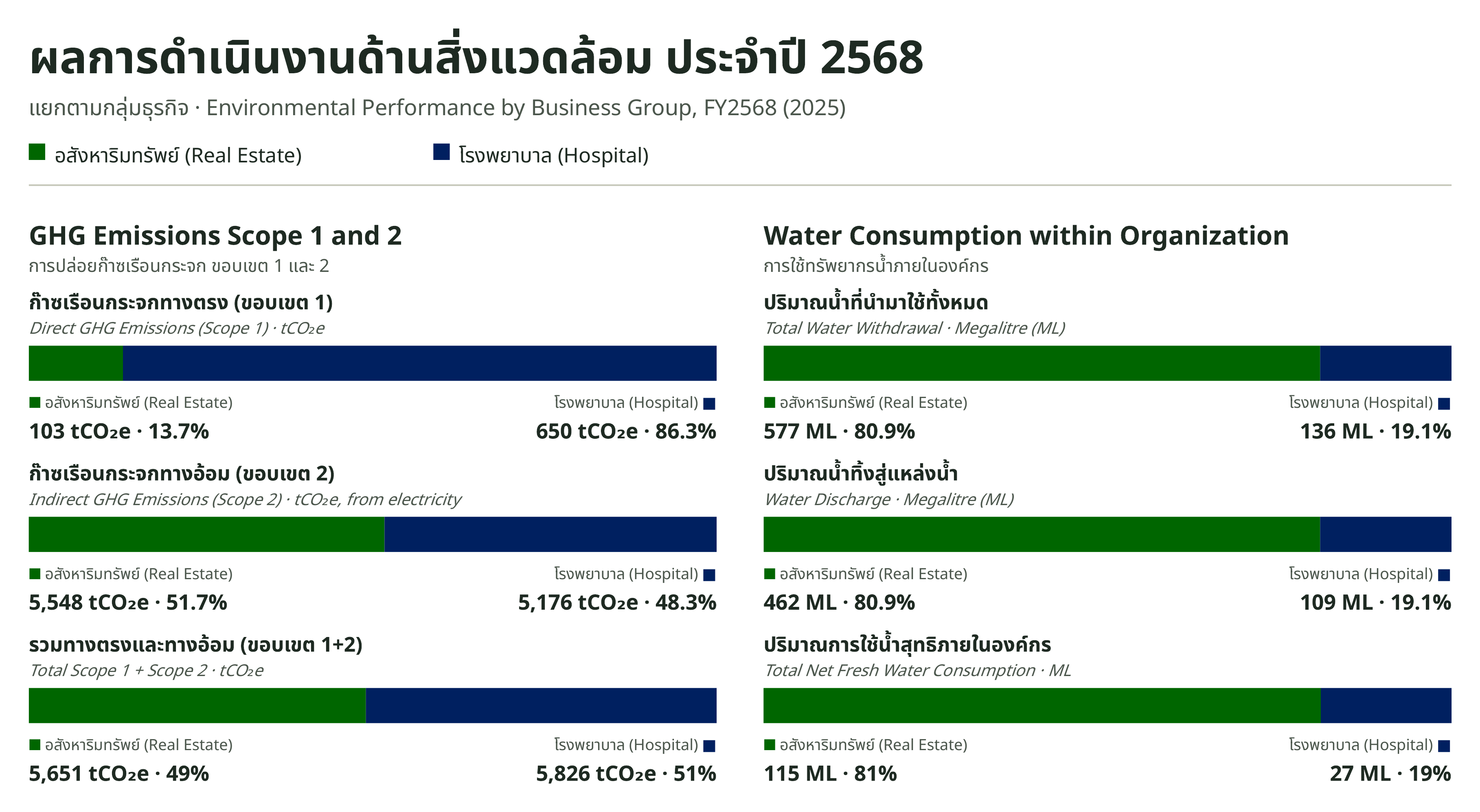
We monitor the environmental impact of its business operations, covering both the real estate and hospital business segments, across two key dimensions, greenhouse gas management and water management, as detailed below.
We are committed to preserving biodiversity from planning and design through to construction. Our core management approaches include:
Policy Integration: Embedding ecosystem protection and restoration into our core business development strategy
Legal Compliance: Strictly adhering to urban planning laws and optimizing green spaces within our projects
Mitigation Hierarchy: Implementing the Mitigation Hierarchy framework to systematically minimize biodiversity impacts in surrounding communities
Ecological Restoration and Biodiversity Conservation with the Royal Forest Department
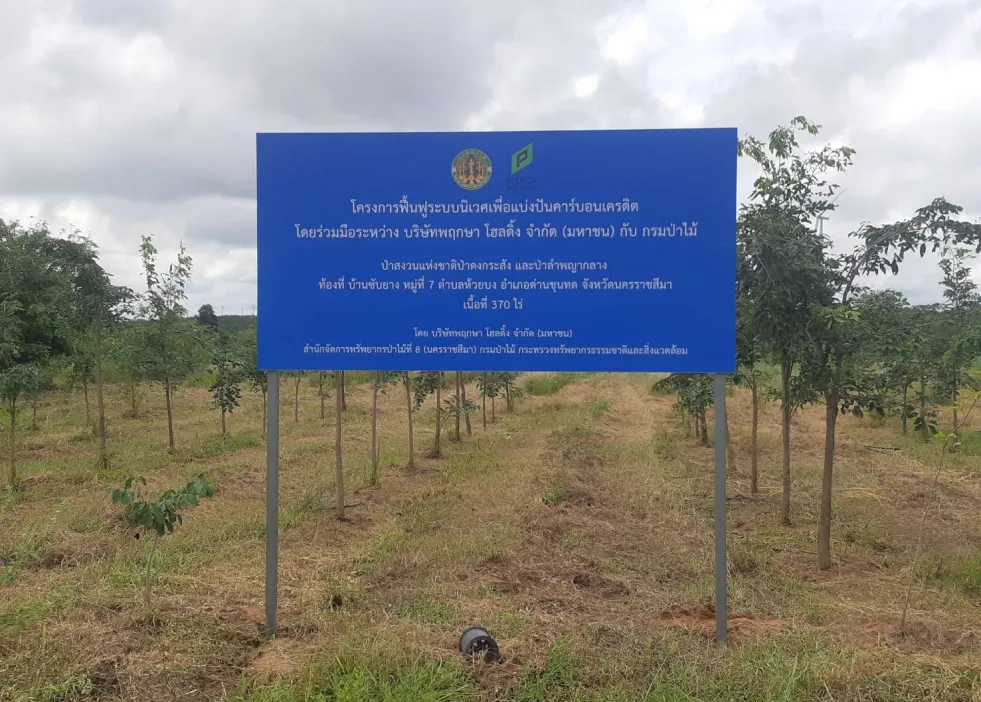
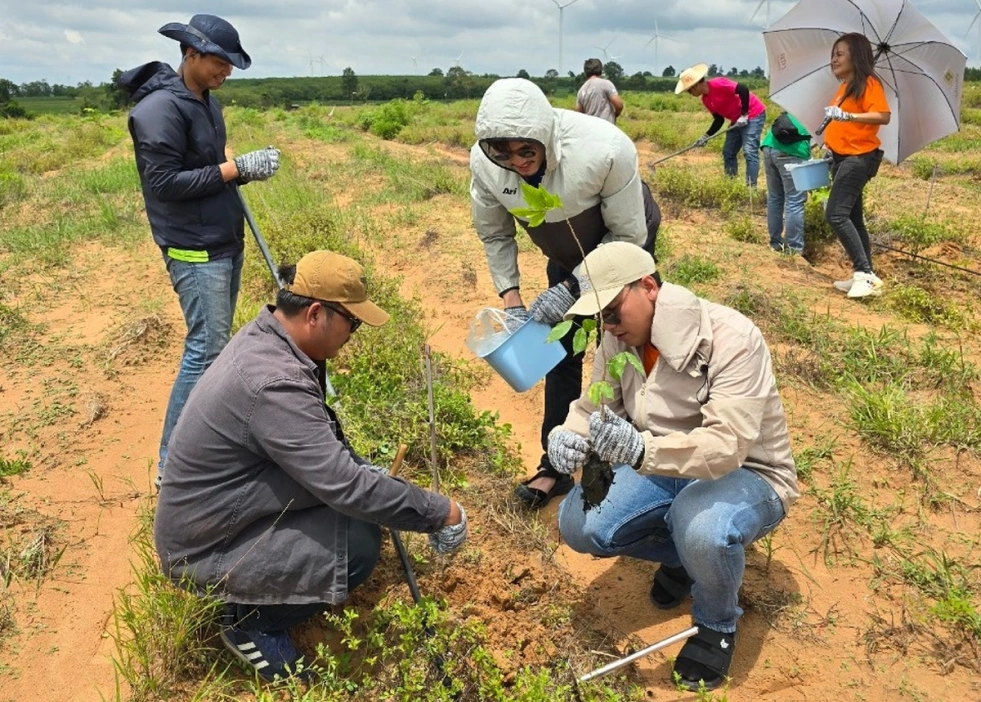
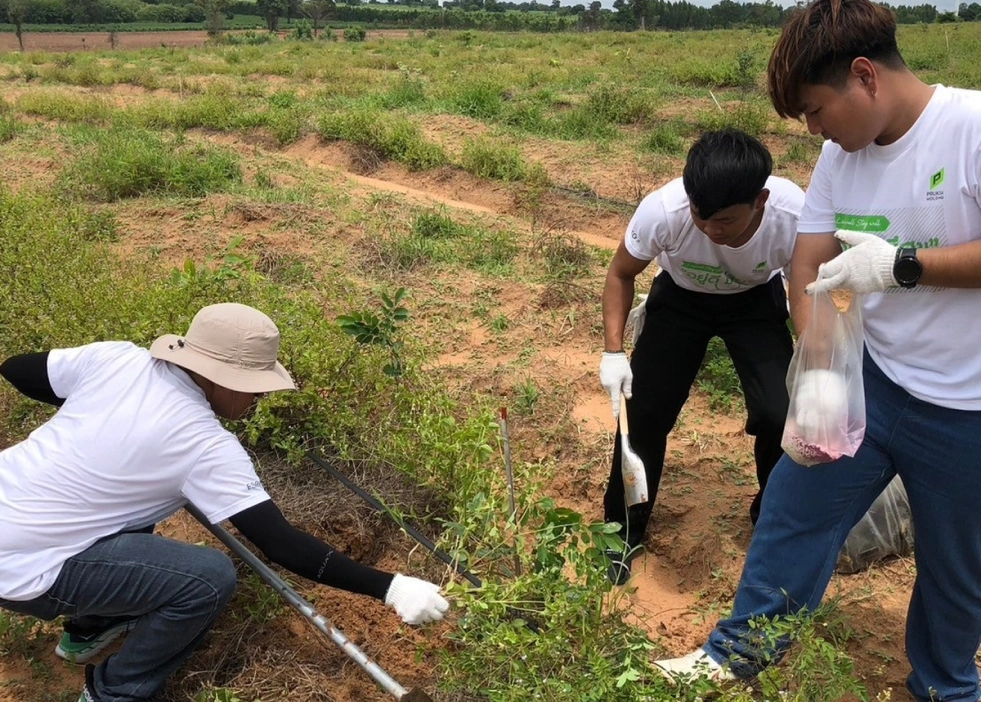
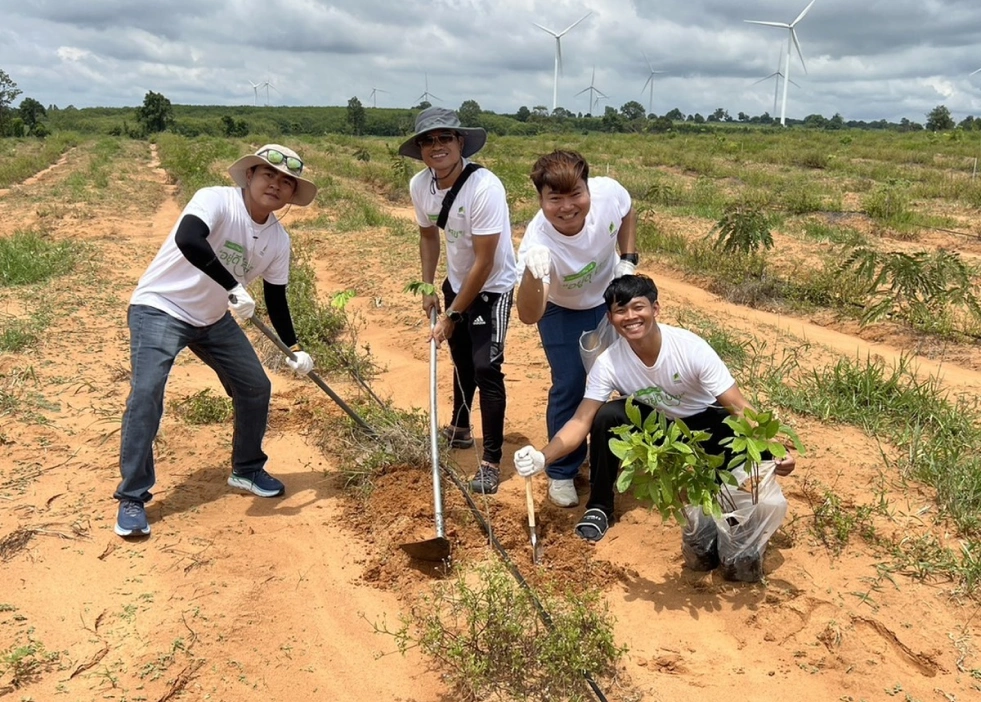
The company is deeply committed to translating its sustainability goals into impactful action by partnering with the Royal Forest Department in a large-scale ecological restoration project covering 370 rai (approx. 146 acres) in Huai Bong Sub-district, Dan Khun Thot District, Nakhon Ratchasima Province. Through the strategic planting of 74,000 trees, the initiative aims to rejuvenate degraded lands into fertile forest ecosystems and restore natural balance over the long term. Driven by our core corporate value ‘Drive for Synergy,’ employees from all business units unite to actively plant, nurture, and maintain the forest site. The project adopts a scientifically sound ecological approach, prioritizing native dry evergreen species tailored to the local topography. This multi-layered forest canopy design recreates critical wildlife habitats, restores natural food chains, and boosts local biodiversity, ensuring the forest grows resiliently and recovers effectively.
Furthermore, the initiative reflects our firm commitment to ‘Impact for Good’ by generating lasting positive environmental and social impacts. The newly restored forest is planned to seamlessly reconnect with adjacent natural habitats, creating functional ecological corridors. These corridors expand natural carbon sinks to mitigate climate change, improve soil moisture retention, prevent erosion, and safeguard fragile biodiversity networks. Importantly, the project fosters active participation with local communities to ensure shared stewardship and long-term protection of the area. y empowering nearby communities and preserving natural resources, the Company delivers a thriving, biodiversity-rich ecosystem that will serve surrounding communities and future generations sustainably.